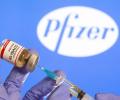
Providing data, it said UK's Public Health England has reported high vaccine effectiveness (87.9 per cent) against the B.1.617.2 variant, most reported in India, in an observational study (concluded on May 22, 2021).
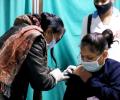
'Ideally, the efficacy data of all the trials should be there in the public domain, and as soon as possible.' 'It is difficult to understand the reason behind the authorisation.'

In view of the unprecedented and peculiar circumstances under which vaccination drive is devised as an executive policy, the "wisdom of the executive should be trusted", it said.
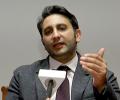
Serum Institute of India CEO Aadar Poonawalla has said that the production of Covid-19 vaccine Covishield is in full swing in Pune and he will review the operations once he is back in the country in a few days. Poonawalla is currently in the UK to meet his family members.

The government is considering setting up air freight stations to enable direct movement of vaccines from pharmaceutical factories to the aircraft.

The prime minister, who is visiting the US at the invitation of President Biden and First Lady Jill Biden, will join them for the state banquet along with a number of dignitaries on Thursday.
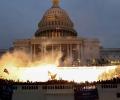
Images that capture what it was like living through 2021.
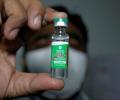
Those who have recovered from COVID-19 respond faster to the Covishield vaccine and reach high antibody levels, says a study, leading to hopes that they may not need a second dose and therefore help widen India's corona immunisation cover.

The Indian Council of Medical Research will start national-level sero surveys to assess the spread of Covid-19 and all states/Union territories should also be encouraged to conduct them so that information from all geographies can be collected, the Union health ministry said on Friday.
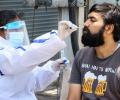
A steady decline in new COVID-19 cases has been recorded in India for the last 20 days, with 24 states witnessing a dip in active cases since the last week, the Union health ministry said.

'Whenever you roll out: effectiveness is important, operational logistics are important, side effects are important and vaccine hesitancy is important.'

A total of 3,006 session sites across all states and union territories will be virtually connected during the launch at 10.30 am by Prime Minister Narendra Modi and around 100 beneficiaries will be vaccinated at each session site.

Prime Minister Narendra Modi will flag off the first phase of the pan India roll-out of COVID-19 vaccination drive at 10.30 am via video conferencing.

The endemic stage is when a population learns to live with a virus.
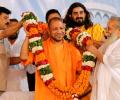
The Bengal outcome can have a marginal impact on national politics. Whereas elections in UP next year might still change the course ahead of the parliamentary poll in 2024, observes Virendra Kapoor.

Eminent virologist Shahid Jameel COVID-19 cases in the second wave also won't come down in as steady a fashion as they did after the first wave.
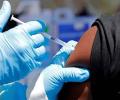
Addressing a press briefing, Union Health Secretary Rajesh Bhushan said healthcare workers and frontline workers need not register themselves as their database has been populated on to the Co-WIN vaccine delivery management system in a bulk manner.

The Oxford vaccine, which also has a tie-up with the Serum Institute of India, was first administered to Brian Pinker, an 82-year-old Oxford-born dialysis patient. Pinker is among the first to be vaccinated by the Oxford University Hospital's (OUH) chief nurse, hailed as a major milestone in the phased vaccination programme being undertaken by the National Health Service (NHS).
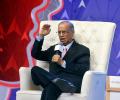
Catamaran, the family office of Infosys founder Narayana Murthy, is targeting 15 per cent returns on its portfolio investments per annum as it shifts focus from early-stage investments to growth and late-stage bets. This would double the firm's assets under management (AUM) from the current $1 billion to $2 billion over the next five years. "For direct investments, we are focusing on growth-stage investments and very selectively on early stage," Deepak Padaki, president, Catamaran, told Business Standard. "(This is) primarily because the early-stage space in India, in the last three-four years, has completely changed. "There has been a huge influx of capital in the last two years. It has become a very crowded space for early-stage investment," he said.

For vaccination, online registration is mandatory. Thereafter, eligible beneficiaries will be informed on their registered mobile number about the nearest vaccination facility, and the date and time of vaccination.
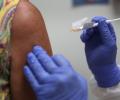
The ministry further stated that it was advisable to receive a complete schedule of the anti-coronavirus vaccine irrespective of past history of infection with COVID-19 as this will help in developing a strong immune response against the disease.

Based on this price, state governments, private hospitals, industrial establishments, etc would be able to procure vaccine doses from the manufacturers.
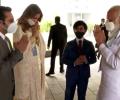
The PM's visit would signal a strong intent towards making sure India becomes a beneficiary as vaccines become a massively traded commodity in the coming years.

Experts said attempts from China have increased in the last year, which further amplified after the Indian government banned Chinese applications post the Galwan clash.

Unless public health is prioritised over swift re-opening, the chances are that a third wave will hit India sooner than we would like.

Politics, bureaucracy, ineptitude, double-standards and an attempt to politicise the fight in pseudo-nationalistic terms have all hampered the fight against this deadly virus, says Vir Sanghvi.

The NTAGI has also stated that those having laboratory test proven SARS-CoV-2 illness should defer COVID-19 vaccination for six months after recovery, the sources said.
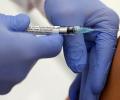
With final preparations underway and the vaccine set to arrive in the national capital in the next couple of days, Rohit Datta, who was the first person to be diagnosed with coronavirus infection on March 1, said "it feels surreal".
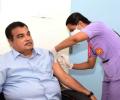
The Union government's role and the prices announced by the vaccine makers raises far too many disquieting questions, observes Prosenjit Datta.
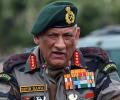
The Padma Bhushan was conferred on 17 personalities including N Chandrasekharan, chairman of Tata Sons, Krishna and Suchita Ella of Bharat Biotech, Cyrus Poonawalla, Satya Nadella, chairman of Microsoft, Sunder Pichai, chairman of Google.

The pandemic has brutally highlighted the inadequacy of India's administrative systems. And, the government has demonstrated its culpable inability to speed up vaccination in a timely manner, says Jaimini Bhagwati.

'The prioritisation of groups for COVID-19 vaccine shall be based on two key considerations -- occupational hazard and risk of exposure to infection, and the risk of developing severe disease and increased mortality'

'People are already sending congratulatory messages. But I have said, "Please don't until the trials are over".'

You need, first of all, to figure out how we messed it all up so badly. You need to fix accountability. None of that is happening, says Vir Sanghvi.
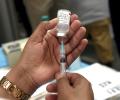
The second phase of Covid-19 vaccination in India will begin from March ,1 in which people above 60 years of age and those above 45 years of age with comorbidities will be vaccinated, Union Minister Prakash Javadekar said on Wednesday.

After healthcare and frontline workers, priority will be given to those above 50 years of age and the under-50 population groups with co-morbidities numbering around 27 crore, it added.

India's willingness to play a big role in the manufacturing and to allow some of those vaccines to go to other developing countries will be an absolutely critical part of containing the pandemic, said Gates.

The average rate of COVID-19 vaccination in the country has been 10.8 million per week. At that rate, it will take India till December 2024 to complete two billion doses.

If the government had paid enough to begin with, or if it had made serious advance purchase commitments that allowed the vaccine producers to mobilise necessary investment, then it is possible to imagine more free or subsidised vaccines such as are available in developed economies, asserts Mihir S Sharma.

'We know, from our experience of this virus, that there's something known as long COVID-19, where you have this persistent fatigue and some people have lost their neurological acuteness and they are not as sharp as they used to be.'
